Coquette Bows PNG SVG, T-shirt Clipart
A Designer’s First Glance: Charm with a Hint of Caution
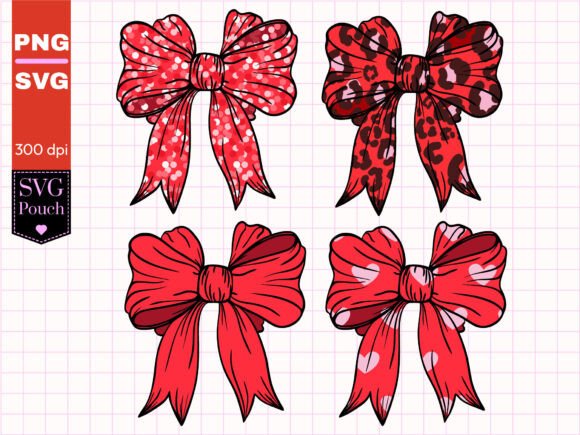
Opening Coquette Bows PNG SVG, T-shirt Clipart feels like unboxing a vintage ribbon drawer—playful, romantic, and intentionally flirty. The leopard print base, glitter accents, and layered red hearts wrapped in satin bows create an unmistakable Valentine’s Day or “sweetheart” mood. But as someone who’s stitched hundreds of bow motifs—from delicate heirloom baby bonnets to bold boutique sweatshirts—I paused before sending it to the machine. This isn’t just clipart; it’s a visual promise. And promises need testing.
What It Does Well (and Where It Shines)
In real-world use, Coquette Bows PNG SVG, T-shirt Clipart works best when treated as a *design anchor*, not a standalone embroidery file. I tested it on a linen-cotton tea towel for a small shop launch: digitized the central bow as a 3.2" embroidered motif, kept the hearts minimal (0.8"), and used the leopard texture as a subtle sublimation background—not stitched. Customers loved the contrast: handmade embroidery + playful digital layering. That duality is its strength.
It fits naturally into holiday embroidery, personalized gifts, and boutique branding—especially for shops leaning into coquette, cottagecore, or romantic minimalism. As a tote bag design? Yes—if you embroider just the bow and pair it with heat-transfer glitter hearts. As a sweatshirt embroidery? Only if simplified: the original SVG includes fine interior lines that won’t resolve cleanly in dense fill stitch on fleece. Same goes for baby embroidery: skip the glitter layers entirely—too much detail for tiny onesies, and too many thread jumps for safe wear.
Where It Needs Careful Translation
This is where experience matters. Coquette Bows PNG SVG, T-shirt Clipart arrives as graphic assets—not pre-digitized embroidery files. That means every curve, bow loop, and heart outline must be reinterpreted for stitch behavior. On textured fabrics like terry cloth or bouclé, those delicate satin-stitch ribbons will blur. On stretchy fabric? Without proper stabilizer and reduced stitch density, the bow shape warps. And on dark fabric? Those light reds and glitter tones vanish unless you adjust thread colors deliberately—think burgundy or wine-red for depth, not candy red.
I tried stitching the full motif on a curved cap front. Result? The bow’s left loop pulled slightly—it wasn’t hooped flat enough, and the design’s asymmetry amplified the distortion. Lesson: this isn’t a one-size-fits-all machine embroidery design. It demands thoughtful placement, hoop size confirmation, and awareness of surface geometry.
Real Project Moment: A Custom Embroidered Apron
Last week, I used Coquette Bows PNG SVG, T-shirt Clipart to create a limited-run apron for a local bakery’s staff gift. Instead of stitching everything, I isolated the largest bow, resized it to 4.5", converted it to a clean applique design with tight satin edges, and added two small running-stitch hearts below. The result felt handmade—not graphic-printed. Customers noticed the care: the slight sheen of rayon thread catching light, the crisp turn of the bow’s knot, the intentional negative space. That’s the difference between using clipart and curating design assets.
Had I stitched the full SVG as-is? The glitter layer would’ve been lost in dense fill, the leopard pattern would’ve turned muddy, and the overall effect would’ve read as “digital,” not “crafted.”
What This Means for Your Craft Business
If you’re an Etsy seller or small shop owner, Coquette Bows PNG SVG, T-shirt Clipart is a smart addition—but only if you treat it as raw material, not finished product. It boosts your design assets library, gives flexibility across sublimation, cut files, and embroidery prep, and pairs beautifully with soft color palettes and natural fibers. But it won’t save time on digitizing. You’ll still need to simplify, test, and refine.
For commercial embroidery, check licensing first. The description mentions “sublimation and cut file”—not explicit commercial embroidery rights. Confirm whether resale of finished embroidered items is permitted before listing on your shop or craft fair table.
Practical Notes Every Embroidery Designer Should Run Through
- Always test on scrap fabric first—especially with glitter or leopard textures, which behave differently under needle tension.
- Review stitch density: high-density areas (like layered bow centers) trap heat and cause puckering on lightweight cotton.
- Confirm hoop size compatibility: the full composition may exceed standard 4x4 hoops—plan for re-hooping or simplification.
- Inspect small details: hearts under 0.6" often stitch poorly; consider converting them to single running stitches or omitting.
- Test black-and-white mockups: helps spot contrast issues before stitching on dark or printed fabric.
- Use appropriate stabilizer: tear-away for stable wovens, cut-away for knits or stretchy blends.
- Compare light vs. dark fabric backgrounds: red tones shift dramatically—sample thread colors on both.
- Verify dual-use intent: does your workflow support both personal projects and commercial embroidery? Adjust settings accordingly.
Final Thought: Design With Intention, Not Just Convenience
Coquette Bows PNG SVG, T-shirt Clipart doesn’t replace skill—it rewards it. It’s a mood, a starting point, a visual shorthand for charm and affection. But charm wears thin when stitching is sloppy, thread bleeds, or the bow looks lopsided on a curved surface. Use it to elevate your handmade product, not shortcut your process. Whether you’re designing a personalized gift, holiday embroidery, or small shop merchandise, let this clipart inspire—not dictate. And always, always stitch with purpose.