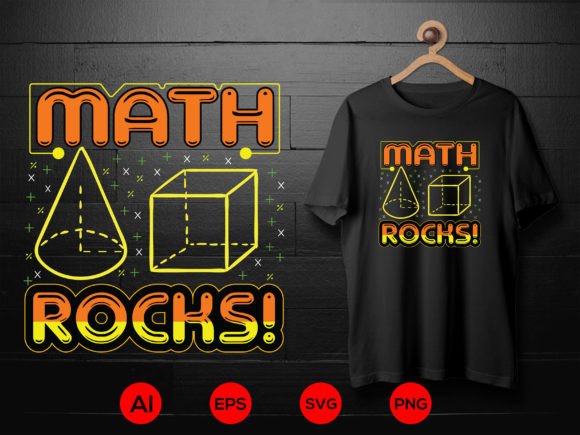
Math T-shirt Design 32 Review: Graphics for T-Shirt Designs
Unzipping a fresh design folder always carries a small spark of anticipation, especially when you are building out a niche collection for an online shop. The file for Math t-shirt design 32 landed with a clean set of AI, EPS, PNG, and SVG formats, which immediately signals that the creator understands what print-on-demand sellers and digital product creators actually need. No missing file types, no messy layers, just a ready-to-test graphic that feels built for commercial workflows.
The design itself leans into a playful, slightly nerdy personality with the phrase Math rocks taking center stage. The lettering has a hand-drawn energy that avoids feeling childish while still staying approachable. It strikes a balance between classroom-friendly charm and casual streetwear appeal, which opens up multiple buyer segments. You can picture this on a high school math teacher during spirit week or on a college student who genuinely loves calculus and wants the world to know it. The visual personality lands somewhere between bold statement piece and lighthearted conversation starter, which is exactly the kind of range that helps a t-shirt design perform across different audience types.
First Impressions and Niche Appeal
From a product creator's perspective, Math t-shirt design 32 taps into the STEM and education merchandise space with surprising confidence. The typography carries a rock-and-roll undertone without screaming too loudly, which makes it versatile enough for both adult and youth apparel. The slightly distressed edges on the letterforms give it a vintage band tee quality, while the subject matter keeps it firmly grounded in the academic and geek-chic world. This combination is not always easy to find in ready-made graphics, where math-themed designs often skew either too cartoonish or overly sterile.
For Etsy sellers who cater to teacher appreciation gifts, back-to-school collections, or graduation season bundles, this asset slots in naturally. It could also attract parents shopping for math-enthusiast kids, tutors building personal brands, or small business owners running STEM-focused social media accounts. The mood is casual but intentional, with enough personality to stand out in a crowded marketplace thumbnail without alienating customers who prefer subtlety over loud graphics.
Real Product Applications for Online Sellers
When evaluating any graphic design asset for commercial use, the first question is always about versatility. How many different products can this one file realistically support before you need to move on to the next design? With Math t-shirt design 32, the answer is encouraging. The vector format means you can scale the artwork to fit everything from a toddler-sized onesie to an oversized wall print without losing quality. The included PNG with transparency gives you an instant drag-and-drop option for Canva templates and digital mockup scenes, which saves time when you are prepping multiple listing images in a single session.
The natural product lineup includes standard t-shirt graphics across unisex, women's, and youth cuts, but that is only the starting point. The design translates well to mug designs, where the bold lettering holds its own on a curved ceramic surface. Tote bag prints are another strong fit, especially for teacher appreciation bundles or librarian-themed merchandise. Tumbler wraps can work if you adjust the layout to accommodate the cylindrical print area, and the vector file makes that adjustment painless. For printable product sellers, this design can become part of a digital download bundle featuring wall art, planner stickers, greeting cards, or invitation templates for math club events and tutoring business promotions.
SVG-focused crafters selling through Creative Fabrica or their own Shopify stores will appreciate the clean cut lines for Cricut and Silhouette projects. The design can become heat-transfer vinyl decals for laptops, water bottles, and notebook covers. Scrapbooking kits and digital paper packs can incorporate the graphic as a focal element, and social media template designers can use it to build promotional visuals for STEM-related content. The file set covers enough ground that you can build an entire mini collection around this one asset without the products feeling repetitive.
How This Asset Supports Better Product Presentation
A strong design asset does more than just look good on a shirt. It needs to perform inside a marketplace ecosystem where thumbnail appeal, listing image quality, and visual storytelling directly influence click-through rates and conversion numbers. Math t-shirt design 32 holds up well in mockup previews because the lettering is bold enough to read at thumbnail size without becoming a blurry mess. The contrast between the typography and a standard mockup background stays clear, which is critical when shoppers are scrolling through dozens of listings in a matter of seconds.
For sellers building seasonal collections around back-to-school timing or teacher appreciation week in early May, this design can anchor a product bundle that feels cohesive rather than randomly assembled. Visual storytelling improves when you can show the same design across multiple product types in a single listing carousel, and the versatile style here makes that easy. A customer who clicks on a t-shirt listing might also see the design on a mug, a tote bag, and a framed print, which increases perceived value and can raise average order size through bundling or cross-selling.
Brand consistency also benefits from designs that have a recognizable personality without being so niche that they exclude potential buyers. The math theme is specific enough to attract a targeted audience but broad enough that you can market it to teachers, students, parents, STEM professionals, and even gift shoppers looking for something clever. The design does not lock you into a single demographic, which gives you room to test different product categories and listing angles without rebranding your entire shop.
Where the Design Performs Best
After testing Math t-shirt design 32 across several mockup scenarios, certain applications clearly rise to the top. Large product previews are the strongest use case because the lettering details and distressed texture need a bit of surface area to read properly. Full-front t-shirt prints, oversized tote bags, and horizontal wall art layouts let the design breathe and make the typography feel intentional rather than cramped. Themed bundles are another sweet spot, where this design acts as a hero piece supported by smaller coordinating graphics like math symbols, ruler illustrations, or chalkboard-texture backgrounds.
Decorative printable products benefit from the vector quality since you can scale the artwork to fill a letter-size print without pixelation. Merchandise graphics for in-person craft fairs or pop-up shops look professional when printed at larger dimensions, and the easy color-change capability mentioned in the item description means you can quickly adapt the design to match different brand palettes or seasonal color schemes. Social media promos featuring this design on mockup backgrounds perform well because the bold typography catches attention even when displayed at reduced sizes on mobile screens.
Where Caution Makes Sense
Experienced sellers know that no single design works everywhere, and Math t-shirt design 32 has a few applications where extra care is warranted. Tiny sticker details under two inches can lose the distressed texture and make the lettering feel muddy rather than crisp. If you plan to use this for small kiss-cut sticker sheets or planner decals, test a scaled-down version first and consider simplifying the design or removing some of the gritty edge details to maintain clarity at miniature sizes.
Overly complex layouts that already contain multiple design elements can clash with the typography style. The design works best when it has room to stand as the primary visual, so forcing it into a crowded composition with competing fonts, borders, or secondary graphics can dilute its impact. Dark background colors are not automatically a problem, but the lettering may need a color adjustment to maintain contrast, and sellers should preview the design on black, navy, and charcoal mockups before finalizing listing images. For Cricut and Silhouette users, the cut lines require inspection since the slightly distressed edges could translate into complex weeding paths depending on the material and blade settings.
Practical Seller Notes and Testing Steps
Before publishing any listing that uses Math t-shirt design 32, running through a standard pre-launch checklist saves time and prevents customer service headaches later. Start by testing the design on real product mockups across at least three different product types. A t-shirt mockup, a mug preview, and a tote bag scene give you enough variety to see how the artwork translates across surfaces without overcommitting to one product format too early. Check how the thumbnail looks at Etsy or Creative Fabrica dimensions, and compare it against competing listings in the math apparel and STEM gift categories to see if the visual stands out clearly.
Preview the design on both white and dark backgrounds to confirm contrast levels, and print a physical test page if you plan to sell printable wall art or sublimation transfers. Screen colors and print colors do not always match, and a quick test print on standard copy paper can reveal whether the distressed texture looks intentional or accidentally faded. Verify PNG transparency by dropping the file onto a colored background in your design software, and inspect SVG cut quality in your cutting machine software to confirm that all paths are clean and properly grouped before promising Cricut compatibility to your customers.
Organize the files clearly before uploading them to any digital download listing. Rename the AI, EPS, PNG, and SVG files with descriptive labels so customers can find what they need without confusion. Confirm the commercial licensing terms from the original asset provider and keep a record of your license for reference. The item description notes that the design is one hundred percent print ready with resizable vector shapes and easy color change capability, which matches what sellers need for fast product creation, but you should still verify every claim by testing it yourself in your specific workflow.
Font Pairing and Design Flexibility
One underrated aspect of working with typography-based assets is how they interact with additional text elements in your own designs. Math t-shirt design 32 carries a hand-drawn, slightly rugged letterform that pairs well with contrasting font styles when you need to add supplementary copy. A clean sans serif font works for adding a shop name or a subtle tagline beneath the main graphic without competing for attention. If your brand leans more decorative, a simple serif font can add a touch of academic sophistication that reinforces the math theme. Script and handwritten fonts should be used sparingly here since the main design already has a human, organic quality, and too many expressive letterforms in one composition can feel chaotic rather than curated.
The easy color change feature referenced in the item description genuinely matters for sellers who need to adapt one design across multiple product lines. Changing the lettering from black to white for dark garments, or from standard black to a vibrant color for seasonal collections, takes only a few clicks in vector editing software. This flexibility means you can list the design in multiple colorways without purchasing separate assets, which improves profit margins and keeps your product catalog visually diverse.
Building a Collection Around One Asset
Smart product creators think in collections rather than individual listings. Math t-shirt design 32 can anchor a themed bundle that includes coordinating designs, related quote graphics, and supplementary clipart elements. If your shop focuses on teacher resources, pair this t-shirt design with printable classroom posters, digital planner stickers, and mug graphics that share a similar visual tone. For print-on-demand sellers, create separate listings for t-shirts, hoodies, tote bags, and phone cases, all featuring this same core design but presented with different mockup styles and product-specific descriptions.
The commercial potential extends beyond the obvious merchandise categories. Small business branding for tutoring services or math-focused educational content can incorporate the design into social media graphics, promotional materials, and packaging design. Bloggers writing about STEM education or homeschooling can use the PNG version in featured images and Pinterest pins. The asset's clean vector structure means it adapts to different contexts without looking like clipart that was stretched beyond its intended purpose.
Testing across platforms also helps identify where this design resonates most strongly. A design that performs modestly on Etsy might sell consistently on Creative Fabrica as part of a larger bundle, or it might become a steady seller on Shopify when paired with targeted social media advertising to teacher and parent demographics. The only way to know is to try different product formats and track which listings generate clicks, favorites, and sales over a reasonable testing period.
Ultimately, Math t-shirt design 32 earns its place in a commercial seller's asset library through practical versatility, clean file delivery, and a niche appeal that feels specific without being limiting. The design knows exactly what it wants to be, a playful celebration of math for people who genuinely enjoy the subject, and it executes that vision with enough style to attract buyers who might not typically browse graphic tee listings. For digital product creators who need assets that work across multiple product categories and marketplace platforms, this file set delivers without demanding heroic editing effort or complicated file conversions. Test it thoroughly, pair it thoughtfully, and let it earn its keep in your product lineup.